
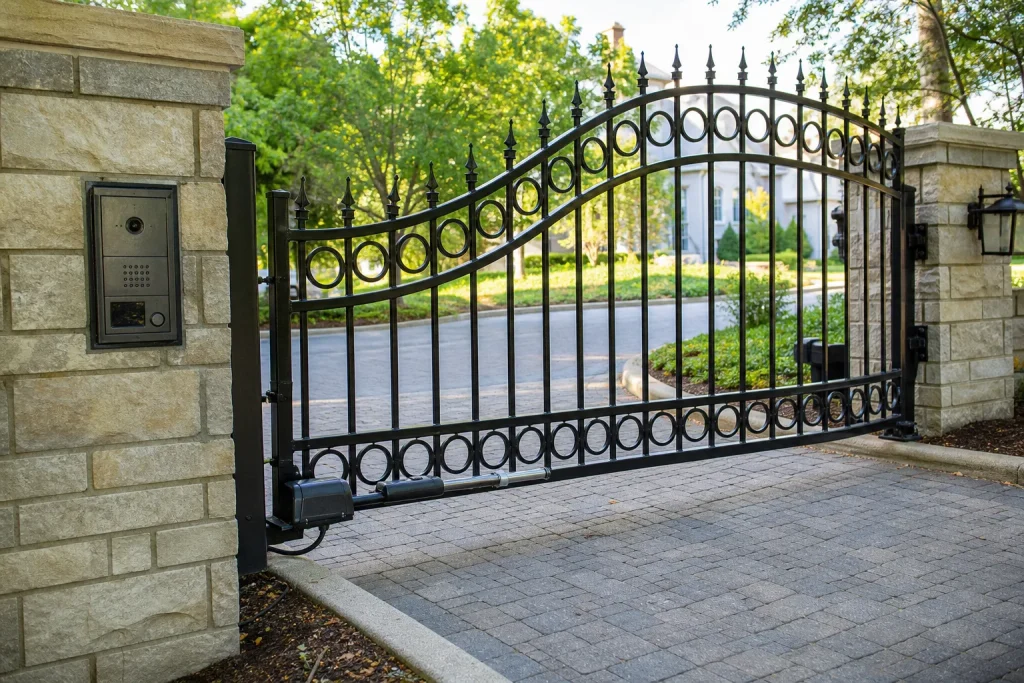
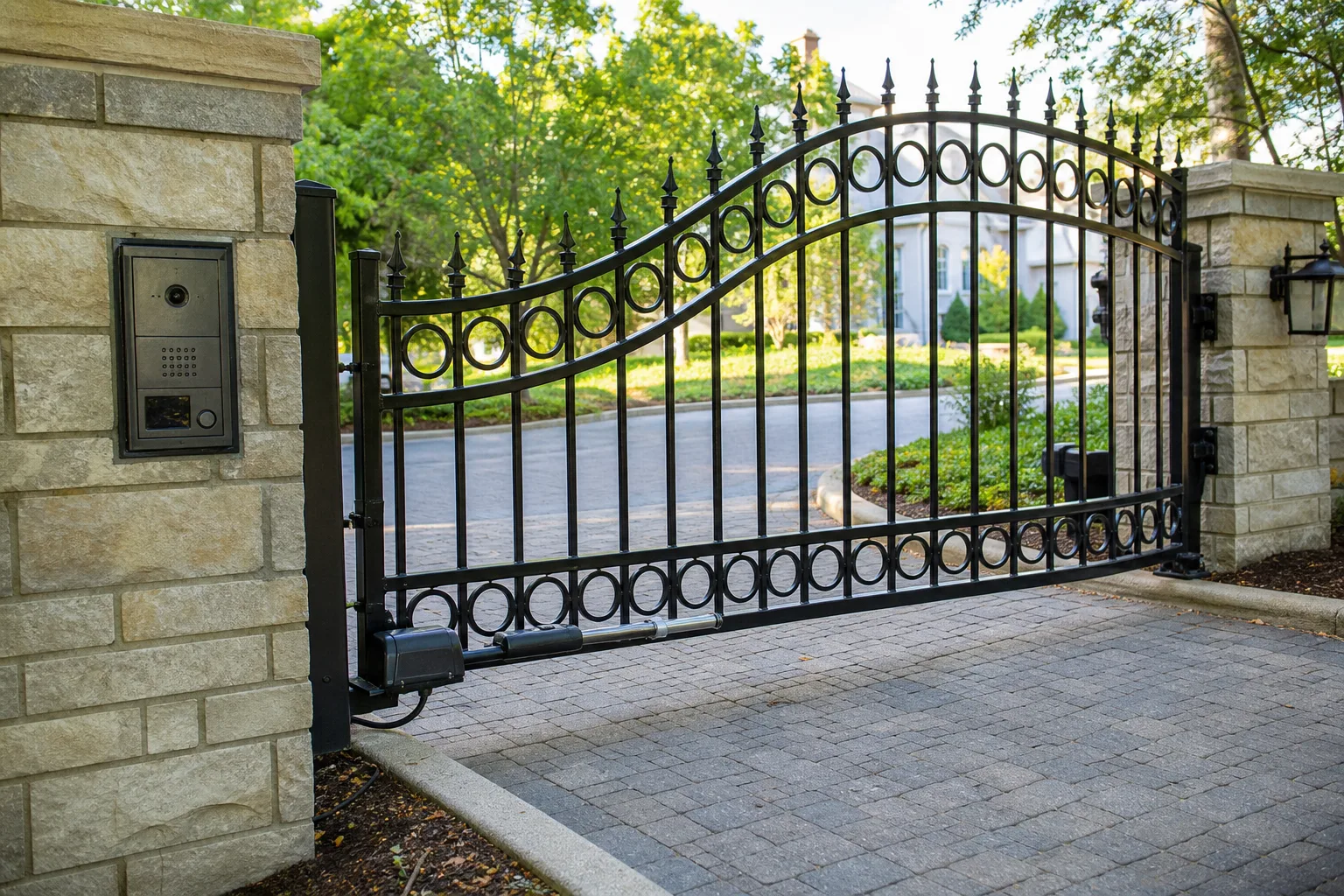
Elite Gate Repair in Chicago: A Homeowner’s Guide
Elite gate repair in Chicago means a technician who reads the gate as an integrated system of metal, motion, and motor - not a parts-swapper who treats symptoms and leaves root causes to fail again. The difference shows up in how long the repair lasts, whether the gate survives the next freeze-thaw cycle, and if you’ll be calling someone else in eighteen months. If you’d rather not diagnose it yourself, Ironworks Gate Co. of Chicago answers live at (844) 321-0766 - a real person, any hour, any day.
A gate that swings freely but stops two inches short of flush isn’t a motor problem. It’s a hinge problem wearing a motor problem’s clothes. We see this misdiagnosis constantly on service calls across Chicago - in Lincoln Park, in Oak Park, out in Schaumburg - where a homeowner has already paid one technician to replace an opener that was perfectly fine. The new motor strains against sagging hinges or a twisted frame until it burns out too. That’s not elite repair. That’s expensive guesswork.
How to Inspect Your Gate Before Anyone Arrives
Most homeowners in Chicago never look at their gate the way a tradesman does. Here’s what to check in ten minutes with a flashlight and a wrench you probably already own.
Hinge wear. Open the gate by hand, power off. It should move through its full arc with steady resistance. If it catches, drops, or requires different effort at different angles, the hinges are binding or the pin bushings are worn. Note which hinge feels rough. A technician who doesn’t ask about this before touching the motor is planning to sell you a motor.
Frame alignment. Sight down the gate from the latch post. The frame should describe a flat plane, not a gentle twist. Chicago’s clay-heavy soils shift with moisture, and we’ve seen gates in Rogers Park with frames torqued half an inch out of true - enough to make the latch miss by a finger-width and the motor work overtime.
Concrete anchor integrity. The post or pillar footing should be solid, no crumble at the grade line, no gap widening between concrete and post. Freeze-thaw in Chicago opens these gaps every winter. Water gets in, freezes, expands, and the post tilts by spring. A motor adjustment can’t fix a post that’s leaning.
Document what you find. A competent technician will confirm your observations and explain how they affect the repair plan. One who dismisses them is telling you something.
Why Welding and Automation Certifications Must Live in One Shop
Gate repair sits at an odd intersection. The mechanical side demands welding craft: cutting, fitting, and fusing steel that carries dynamic load. The automation side demands electrical and electronic competency: low-voltage wiring, control-board diagnostics, programming logic for safety loops and access devices.
Most companies do one or the other well. General handymen often weld adequately but lack automation training. Garage-door companies may know openers but treat gates as oversized doors, missing the structural loads and safety requirements that differ entirely. Dedicated gate shops with both skill sets under one roof are rare in Chicago - and they’re the only ones equipped to solve integrated problems correctly.
Before you sign anything, ask two questions: “Who does your welding?” and “What automation brands are you certified to service?” The answers should be specific. At Ironworks Gate Co. of Chicago, our technicians carry both capabilities because we’ve learned that separating them creates the loop of failed repairs we’ve been called to fix for over forty-two years.
We’re certified on nine automation brands - including FAAC, BFT, Linear, and Viking - so the correct fix happens on the first visit, whatever hardware is on your driveway. No ordering parts blind. No return trips to “figure out the electronics.”
Chicago’s Freeze-Thaw Cycle: The Adjustment That Matters
A gate adjusted in June and a gate adjusted for Chicago’s full year are different animals. The expansion and contraction of steel and aluminum across a 100-degree seasonal swing changes clearances, latch engagement, and motor load. A generic adjustment - set it, forget it - fails by February when the frame has shrunk half a millimeter and the latch no longer reaches.
Elite repair in Chicago accounts for this. We set clearances slightly wider in autumn than we would in spring. We specify lubricants rated for subzero operation, not the all-purpose stuff that gums at ten below. We check concrete footings with winter heave in mind. In our experience, a gate we tuned in October in Wicker Park needs different spring settings than the same model in Phoenix would ever see.
The technician should explain this seasonal context. If they don’t, they’re not thinking past the invoice date.
Reading a Written Warranty: What It Should Actually Say
Vague promises are easy to make and hard to enforce. Here’s language to look for, and red flags to walk away from.
- Look for: Specific duration (“90 days,” “one year”), specific coverage (“parts and labor,” “all components we touched”), specific remedy (“we return and repair at no charge,” “full replacement if repair fails”). The warranty should name what triggers it and what happens next.
- Look for: No exclusionary fine print requiring you to prove maintenance records, no deductible, no “original purchaser only” clause that voids on home sale.
- Red flag: “Satisfaction guaranteed” with no mechanism. Satisfaction is subjective; repair success is measurable.
- Red flag: “Limited warranty” with limits undefined. Limited how? Limited when? Limited by whom?
- Red flag: Warranty requires you to call a different number, fill out online forms, or mail documentation. A company that makes claiming hard doesn’t intend to honor.
Our 90-Day Done Right Promise - the Keystone Standard - is written, no paperwork, no arguing. If it’s not right, we come back and make it right. Every job. No exceptions. We’ve honored it since 1984, and we keep the records so you don’t have to.
Why Elite Repair Costs Less Over Five Years
The lowest bid usually wins on day one and loses by year three. Here’s the arithmetic we see play out across Chicago neighborhoods.
A budget repair at $200, misdiagnosed, fails in fourteen months. The motor burns out because the hinge was never fixed. That’s another $800. The second technician notices the frame twist but patches around it. Eighteen months later, the latch post is leaning. Now you’re quoted $2,400 for structural rebuild.
Total: $3,400 across four years, three service calls, two days waiting at home.
An elite repair at $650 addresses hinge, frame, and motor as one system. The gate runs five years without callback. Total: $650, one visit, one morning.
The “expensive” option saved $2,750 and a season of frustration. This is why we price upfront, before a bolt turns - so you see the full picture and decide with numbers, not pressure.
When to call a pro: If your gate makes new noises, moves unevenly, or the opener works harder than it used to, the problem is already progressing. Catching it early keeps the repair scoped to adjustment and component replacement, not structural rebuild. Call (844) 321-0766 - a live person answers, 24 hours a day.
Related services in Chicago: For motor and opener issues specifically, see our Gate Motor & Opener in Chicago page.
Key Takeaways
- Inspect hinges, frame alignment, and concrete anchors before calling anyone - and only hire a technician who does the same.
- Demand proof of both welding craft and automation certification; gate repair requires both, and most shops only have one.
- Chicago’s freeze-thaw cycle requires seasonal adjustment thinking, not generic settings.
- A written warranty should specify duration, coverage, and remedy in plain language - vague promises protect the company, not you.
- First-cost bidding hides lifetime cost; integrated repair from a specialist pays back within the first failure cycle of a cheap fix.
The Bottom Line
Elite gate repair isn’t about price point or marketing language. It’s about a technician who sees the weld and the motor as one system, who adjusts for Chicago’s particular abuse of outdoor metal, and who puts the guarantee in writing because the work will stand up to it. We’ve been that company in Chicago since 1984, and we plan to be here when your gate needs its next honest look.
If you’re in Chicago and need help reading your gate’s condition, or you’re ready to stop calling back the last repair, Ironworks Gate Co. of Chicago offers free estimates. Call (844) 321-0766. A live person will answer, any hour, and we’ll give you a square deal: upfront price, no surprises on the bill.
Frequently Asked Questions
Most residential gate repairs in Chicago fall between $250 and $850, depending on whether the issue is mechanical (hinges, welds, frame) or involves automation components. Structural problems like leaning posts or twisted frames run higher because they require excavation and concrete work. We provide upfront pricing before any work begins, and our $50 off any repair over $250 applies automatically. Call (844) 321-0766 for a free estimate - we’ll scope it precisely.
Yes, most repairs are completed in a single visit because our technicians carry both welding equipment and automation diagnostics for nine major brands. Same-day service depends on parts availability for your specific hardware, but we stock common components for FAAC, BFT, Linear, Viking, and other leading brands. Call (844) 321-0766 - a live person answers 24 hours a day, and we’ll tell you honestly what timeline your gate requires.
Repair is almost always the better value if the frame is structurally sound and the gate was well-built originally. A quality steel or aluminum gate frame from the 1990s or 2000s often outlasts multiple automation systems. Replacement becomes the wiser choice when the frame is twisted beyond straightening, concrete footings have failed, or repair costs approach 60% of replacement. We offer free second opinions on any written estimate if you want confirmation.
Ask four things: what automation brands they’re certified to service, who does their welding, whether they adjust for seasonal expansion in Chicago’s climate, and what their written warranty specifically covers. Vague answers to any of these suggest you’ll be calling someone else within two years. A company that does this work right will answer plainly and welcome the questions.
Written by the team at Ironworks Gate Co. of Chicago, serving Chicago since 2014.
Need Gate Repair Help?
Call Ironworks Gate Co. of Chicago - licensed & insured, here with fast after-hours help in Chicago.
(844) 321-0766